
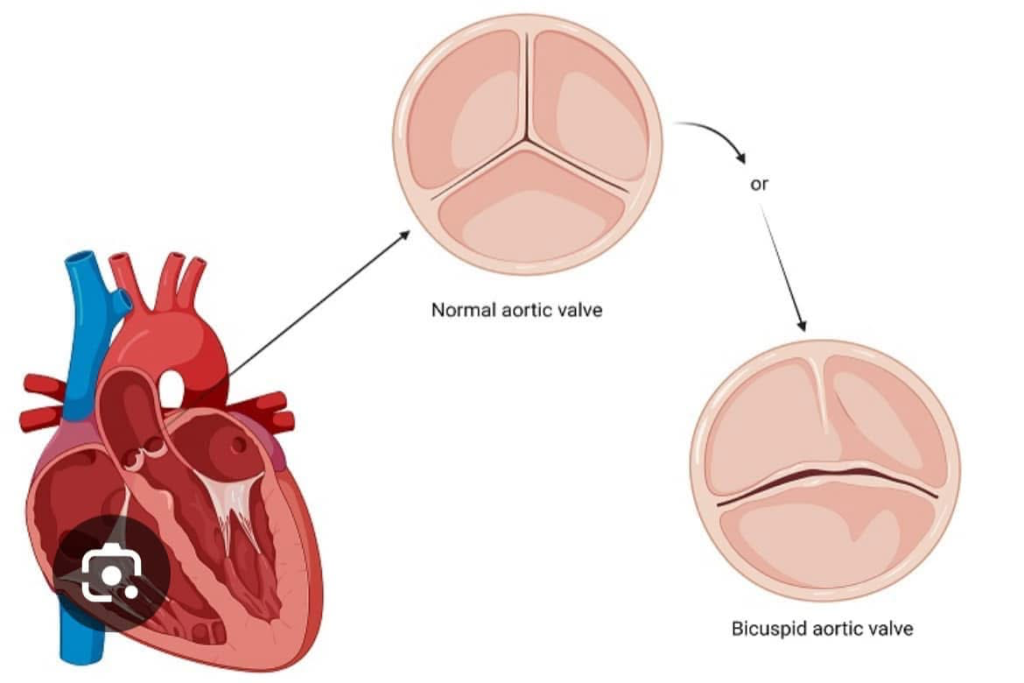
Most people have never heard of a bicuspid aortic valve, yet it is one of the most common heart conditions present from birth, affecting roughly one to two people in every hundred. Many live with it for decades without knowing. For some, it remains harmless for life. For others, it needs careful monitoring and, eventually, treatment.
What Is A Bicuspid Aortic Valve?
The aortic valve sits between the heart’s main pumping chamber and the aorta, the large artery that carries blood to the body. A normal aortic valve has three thin flaps, called leaflets or cusps. A bicuspid valve has only two, usually because two of the leaflets are fused together during development before birth.
It is more common in men and can run in families.
Why Is It Often Found In Adulthood?
A bicuspid valve may work normally for many years. It is often discovered when a doctor hears a murmur during a routine check-up, or when an echocardiogram is done for another reason. Some people only find out when symptoms develop in middle age.
What Problems Can It Cause?
The two-leaflet design places more stress on the valve over time. The most common long-term issues are:
Aortic stenosis. The valve can thicken and calcify, narrowing the opening. This tends to happen earlier than in people with a normal valve, often in their forties to sixties.
Aortic regurgitation. The valve may not close properly, allowing blood to leak backwards.
Enlargement of the aorta. Many people with a bicuspid valve have a weaker wall in the first part of the aorta, which can gradually widen (an aneurysm). Rarely, this can lead to a tear, called aortic dissection.
Infection. Abnormal valves are more vulnerable to endocarditis, an infection of the heart’s inner lining.
Can It Be Detected Early?
Yes. An echocardiogram is a simple way to detect a bicuspid valve, and many are now found in childhood or early adulthood during scans for other reasons. Anyone with a parent or sibling known to have a bicuspid valve should ask their doctor about a screening echo.
Symptoms To Watch For
Many people have no symptoms for years. When symptoms appear, they may include breathlessness on exertion, chest pain or tightness, dizziness or fainting, palpitations and reduced exercise capacity. Sudden severe chest or back pain needs emergency care: call 998.
How Is It Monitored?
An echocardiogram is the main test, showing how well the valve opens and closes and the size of the aorta. If the aorta cannot be seen clearly, a CT scan or cardiac MRI may be used. How often scans are repeated depends on the findings, from every few years to every year or more often.
Read More: What’s the Best Home Automation System That Actually Works in 2026?
Because the condition can run in families, first-degree relatives such as parents, siblings and children may be offered a screening echocardiogram.
When is Treatment Needed?
Treatment is considered when the valve becomes severely narrowed or leaky, particularly with symptoms or signs that the heart is under strain. Options include surgical valve replacement, valve repair in selected cases, and, for some patients, catheter-based valve replacement. If the aorta has enlarged beyond a certain size, it may be repaired at the same time.
Living With a Bicuspid Valve
Most people can lead normal lives. Keep blood pressure well controlled, maintain good dental hygiene, attend scheduled scans and seek advice before very heavy weightlifting or competitive sport if the aorta is enlarged. Women planning for pregnancy should speak to their cardiologist beforehand.
Choosing A Hospital For Long-Term Follow-up
A bicuspid valve is a lifelong condition, so continuity matters. People comparing options for the best hospital in Dubai for long-term care should look for one that offers detailed cardiac imaging, valve and aortic surgery, and specialists experienced in conditions present from birth.
Where can adults with a Bicuspid Valve Be Followed Up in Dubai?
Aster Hospital Dubai, with five facilities across Mankhool, Al Qusais, Muhaisnah and Jebel Ali and more than 35 specialities, runs an adult congenital cardiology hospital in Dubai service that uses cardiac MRI and 3D echocardiography to follow conditions such as bicuspid aortic valve. Its cardiac surgery team provides valve repair and replacement and aortic dissection treatment when intervention is needed.
Read More: Best YouTube Proxies in 2026 – Residential VS. Data Center
A bicuspid aortic valve is common and usually manageable. The key is knowing you have one and keeping an eye on it.