
The Himalayas do not talk but they sing. The silence there is not empty. It is full of mountain air, soft wind, and the sound of steps on a rocky trail. Every trek here tells a story. Nepal mountains are wild, kind, and deep. The people smile even when cold wind blows. The paths are old, walked by monk, porter, and dreamer. These four treks show that silence also has music inside.
Manaslu Circuit Trek
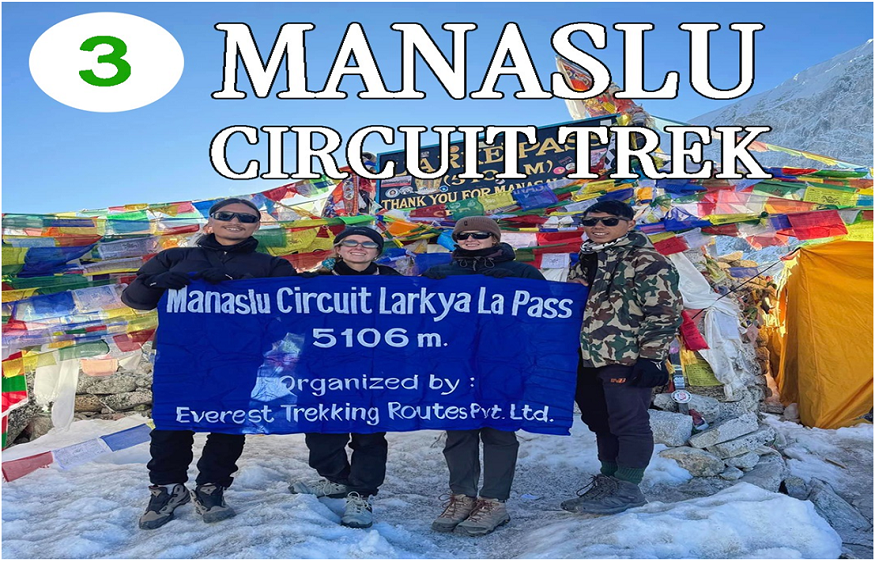
Manaslu Circuit Trek except for careless legs. It’s lengthy, it’s challenging, but it’s full of heart. You stroll Mount Manaslu, the 8th highest hill in the world. The course goes high, going throughout Larke La Pass at 5,106 meters. The air is slim there, but the mind opens up. You see towns so old, resembling time stops. You satisfy people from Gurung and Tibetan Culture with a simple life and typeface. The beginning point is often in Soti Khola. The path follows the Budi Gandaki River. Narrow valleys, dangling bridges, and green woodland all make you feel small. You increase slowly, from warm land to cold wind. The sound of sprinkles follows you completely. It’s like a song about a mountain. When you get to Samagaon, you feel magic. Manaslu stands right over, a white giant watching. You can go on a side hike to Manaslu Base Camp or to Pungyen Gompa, where monks’ incantations and petition flags fly. The air filled with tranquility. The mountain shines in dawn; gold light touches the snow top. The past day was hard. Larke La is gusty and cold, but you grin. You did it. Afterward, you go to Bimthang. Rhododendrons bloom, and birds sing once again. The silence transforms into delight. The Manaslu Circuit Trek is the Best for people that want wildness and that want much less of a group. It is still remote. No big resorts, simply teahouses run by nice people. Every night you rest by the fire, drink tea, talk with travelers, and feel alive. The best time to go remains in fall (September to November) or springtime (March to May). The skies clear, the hill bright.
Langtang Valley Trek
The Langtang Valley Trek is not far from Kathmandu, but it feels far from the world. It is called the “valley of glaciers.” The path goes through Langtang National Park. Woodland of yern, bamboo, and rhododendron. You walk by the river, you pay attention to birds, and you smell fresh plants. After the 2015 quake, the Langtang community was broken, but people rebuilt it . Currently when you go, you feel both unhappiness and stamina. The residents grin and invite travelers with open arms. Their life is simple but filled with spirit. The trek begins with Syabrubesi. You increase along Langtang Khola. You go across small bridges and stroll under woodland color. Apes jump about. After a couple of days, the woodland finishes and the mountain comes shut. You get to Langtang town and after that, Kyanjin Gompa, the last stop. Kyanjin Gompa is small but peaceful. It rests under Langtang Lirung mountain. You can hike up to Tserko Ri in the morning. The view from the top is huge. Snow top after snow top. The sunlight rose slowly, and the light landed on the valley. You simply stand peaceful. No need to talk. The silence sings. The Langtang Valley Trek is short and easy compared to various other big trips. The very best time to go is springtime or fall. In springtime, blooms color all the courses. In fall, skies are clear and bright. It’s perfect for beginners or for people that want to be close to nature but not too far from the city.
Mardi Himal Trek
The Mardi Himal Trek is not too lengthy, not too brief. It is new but has become my favorite fast food. The path goes inside the Annapurna area, close to Pokhara. From the first day, the mountain feels close too. Particularly Machhapuchhre, the “Fishtail mountain,” constantly watching you. The trek begins with Kande or Dhampus. You go through woodland, green and peaceful. The trees danced with haze. Small lodges show up in the process. You satisfy residents, drink tea, and listen to their tales. Every step brings a better view. You pass Woodland Camp, Reduced Camp, and after that, High Camp. Everybody is beautiful. At High Camp, you see the whole range—Annapurna Southerly, Hiunchuli, Machhapuchhre, and Mardi Himal. You stand and simply appear. The silence there is soft but deep. Next early morning, you hike to Mardi Himal View Point or Base Camp. The sunlight comes, and the mountain radiates orange and gold. It feels unreal. You do not need words. The minute talk itself. The path is not busy like ABC or EBC. That makes it unique. You stroll peacefully, listen to your own step, and listen to the wind. It seems like a trick course just for you.
Best period for the Mardi Himal Trek is also fall and springtime. The skies open up, the mountain is clear, and the temperature is nice. It is among the Best brief treks in Nepal, about 5 to 7 days.
Annapurna Base Camp Trek
Annapurna Base Camp Trek, or ABC Trek, is one of the most well-known in Nepal. Lots of travelers from all over the world come for it. And it deserves it. It shows everything—woodland, river, towns, mountain, and dawn—done in one trek. It begins with Pokhara, the city of lakes. You go to Nayapul or Jhinu; after that, start the stroll. Paths include Ghandruk, Chhomrong, Bamboo, and Deurali. It climbs up and drops over and over. But every transform gives a more beautiful view compared to the last. The very best section is when you get to Annapurna Base Camp. You stand inside a circle of mountains. Annapurna I, Machhapuchhre, Hiunchuli, and others border you. It is like remaining in the center of a giant snow wall surface. When sunlight rises, the entire circle shines gold. Lots of travelers weep there. The feeling is too solid, too pure. In the process, you see Gurung and Magar towns. People are pleasant and grin easily. You consume dal bhat, drink soup, and laugh with them. In the evening, celebrities are bright like rubies. The sound of mountain wind seems like whispers from the skies.
The ABC Trek can be performed in 7 to 10 days. It is moderate degrees, not too hard but not too easy. Best time once again is springtime and fall. In springtime, rhododendrons make mountainsides red and pink. In fall, clear views and crisp air are perfect for pictures.
Why These treks Feel So Alive
All these treks—Manaslu, Langtang, Mardi, and Annapurna—are various in spirit. They show the real heart of Nepal. The mountain is big, yes, but individuals are larger in generosity. You feel tranquility not just from nature but from human touch. The silence there is not empty. It is filled with sound if you pay attention right. The rustle of fallen leaves, the bell of a yak, the laugh of children, and the incantation from the abbey. Everything blends like a tune. The silence sings through the Himalayas, and you stroll in its rhythm. Lots of travelers say after returning, they are not exactly the same. The mountain changed them. You learn persistence, respect, and the meaning of small points. One favorite, one grin, and one dawn become enough.
Best Time for All These treks
The very best time for trekking in Nepal is mainly the exact same for all. Fall (September to November): Skies are blue, there’s no rain, and the hill is clear. Perfect for photos, for views, for walking lengthy hours. Springtime (March to May): Blossoms bloom, mountainsides are filled with color, and the temperature level is warm. Snow is still on the peaks, so you obtain both beauty and convenience. Winter (December to February): cold, some trails snow protected, but peaceful. Great for brief treks like Langtang or Mardi. Downpour (June to August): Wet, leeches on the path, but also the greenest time. Great for professional digital photographers that love haze and clouds.
Culture, People, and the Spirit of Mountain Life
In every trek, Culture satisfies you first before the mountain. The tea houses filled with grins. You drink tea, you consume dal bhat, and you discuss life. No rush, no stress. Individuals live simple but happy lives. They depend upon nature and respect it deeply. In Manaslu and Langtang, you feel Tibetan influence. Abbeys, petition wheels, and many wall surfaces along the course. In the Annapurna and Mardi areas, Gurung and Magar people show you dancing, celebrations, and warm invites. Each trek instructs something. You learn humbleness from the mountain, generosity from people, and tranquility from silence.
The trek and the Return
When the trek finishes, you return to the city. If you are in Pokhara or Kathmandu, drink coffee and take a look at a picture. You grin but are also peaceful inside. Because the silence is still with you. It follows you from mountain to mind. You recognize the Himalaya is not simply about climbing up or strolling. It is about paying attention. The silence sings there, and you enter into the tune.
Final thought—The Tune That Never ever Finishes
The Manaslu Circuit Trek gives you the raw power of the mountain. The Langtang Valley Trek gives you the heart of individuals. The Mardi Himal Trek gives you tricky beauty. The Annapurna Base Camp Trek gives you everything with each other. 4 trails, 4 tales, one feeling—tranquility. You stroll, you sweat, you grin, you weep, but in completion, you feel entire. The silence that sings through the Himalayas stays forever in you. When you shut your eyes in the evening, you still listen to it. The wind over Manaslu. The river in Langtang. The petition was flagged in Mardi. The dawn over Annapurna. The silence is not gone. It enters into you.
And that’s why people keep returning. Over and over. Because of silence, they find their own tune.
Contact Details
Company address: Everest Trekking Routes Pvt. Ltd.
16 Khumbu, Nayabazaar, Kathmandu, Nepal
Mobile : +977-9843467921 (Rabin)
Email: [email protected]